

Gold Surges on Monetary Policy Risks, Tariff Risks, and Iran-US Tensions
Gold prices climbed to their highest level for February. Investors are driving the rally as they price in monetary policy risks, tensions with Iran, and new tariffs. Gold prices saw one of their strongest declines in history towards the end of January. However, the recent upward price movement the asset has witnessed in recent days has resulted in a 71% correction.
Inflation and Monetary Policy Risk
Higher inflation tends to trigger weaker Gold prices as investors expect the US Dollar to rise and the Federal Reserve to take a hawkish stance. However, the latest Core PCE Price Index, which read higher than expectations, is more complex. The US on Friday saw its Gross Domestic Product fall from 3% to 1.4% and both the manufacturing and services PMI read lower than expectations.
Both the PMI indexes were higher than the 50.00 level, meaning economists continue to believe the economy will continue to grow. However, the lower reading is a clear indication of strain, particularly when pairing the release with the poor GDP figures. Furthermore, the Core PCE Price Index rose from 0.2% to 0.4%, significantly higher than expectations. For this reason, the Federal Reserve will find it difficult to adjust interest rates, but at the same time this will strain the economy.
For this reason, investors continue to increase their exposure to Gold and other safe-haven assets. President Trump’s 2026 State of the Union speech will take place at 02:00 tomorrow morning and can also trigger volatility. Economists will be closely monitoring for comments on policy and trade.
US Trade Tariffs
Another key driver of gold prices is the Supreme Court’s decision on trade tariffs and the US response. The US Supreme Court ruled that prior tariffs exceeded the administration’s legal authority. The decision limited the executive branch’s power to impose broad trade restrictions without clearer congressional approval. The ruling created market uncertainty, as investors expected the tariffs to remain and support ongoing trade negotiations.
In response, the White House signaled it would pursue alternative legal pathways to impose new global tariffs, citing different statutory authorities related to national security or trade imbalances. The US has announced a new 10% tariff, which is now in place.
This move has heightened trade tensions with key US partners and introduced renewed volatility across equities, currencies, and commodities. Markets tend to react negatively to abrupt policy shifts, particularly those that raise the risk of retaliatory measures, higher input costs for US companies, and slower global growth.
US-Iran Conflict Imminent?
US officials are weighing a possible airstrike against Iran tied to nuclear and regional security concerns, with President Trump consulting top advisers amid stalled negotiations, and Iran warning of significant retaliation if attacked. News agencies have very clearly reported the build up of navy and air force in the region which indicates an attack. However, there has not been a build-up of ground forces, which is key.
The US State Department ordered nonessential diplomats and families to leave the US Embassy in Beirut, Lebanon, citing heightened threats linked to Iran and its proxies and signaling concern over potential escalation.
Gold - Technical Analysis
Over the past week, Gold has been forming clear wave highs and obtaining indications of buyers maintaining control. The price during this morning’s Asian session has formed a retracement. However, the retracement has momentum and did not fall to the previous low. As a result, price action continues to remain positive for now.
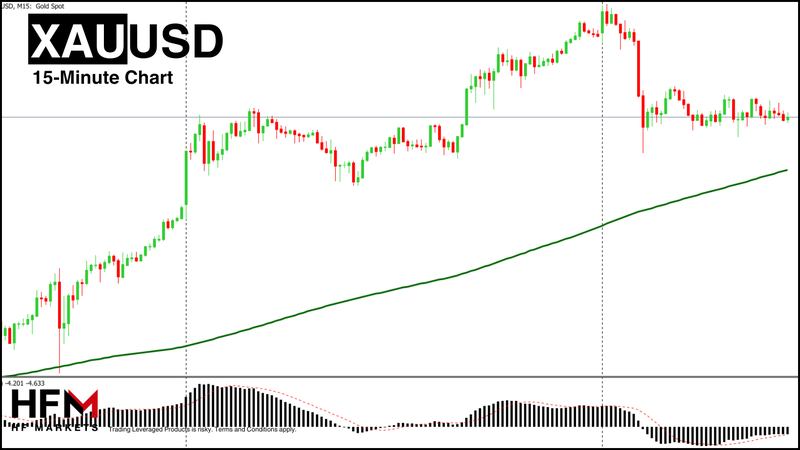
The price currently remains above the key moving average on both the two and one hour timeframes. In addition, the price remains on the positive side of the RSI. On smaller timeframes, such as the five-Minute chart, the price is forming a symmetrical triangle pattern which is a neutral signal. However, in order to obtain bullish indications, a price above $5,192 would be key. At this level the price will trade above the VWAP, 200-bar moving average and show signs of bullish momentum.
Key Takeaways:
- Gold rebounds strongly: Prices reached February highs after a sharp late-January decline and 71% correction.
- Macro uncertainty grows: Sticky inflation, weaker GDP, and softer PMIs complicate Federal Reserve policy decisions.
- Tariff risks rise: A new 10% US tariff increases trade tensions and market volatility.
- Geopolitical tensions build: Possible US action against Iran boosts safe-haven demand.


Terms and Conditions apply
Click here to access our Economic Calendar.
Disclaimer: This material is provided as a general marketing communication for information purposes only and does not constitute an independent investment research. Nothing in this communication contains, or should be considered as containing, an investment advice or an investment recommendation or a solicitation for the purpose of buying or selling of any financial instrument. All information provided is gathered from reputable sources and any information containing an indication of past performance is not a guarantee or reliable indicator of future performance. Users acknowledge that any investment in Leveraged Products is characterized by a certain degree of uncertainty and that any investment of this nature involves a high level of risk for which the users are solely responsible and liable. We assume no liability for any loss arising from any investment made based on the information provided in this communication. This communication must not be reproduced or further distributed without our prior written permission.
Michalis Efthymiou
Michalis Efthymiou has extensive experience within the financial sector throughout the UK and Europe. After spending 5 years in London where Michalis operated as a financial advisor and an underwriter, he then entered the market analysis sector.
Additionally, he held training sessions and seminars in over seven countries across the globe and is now focused on providing investors with the required guidance to operate within the market with full confidence.
His teaching methods are based on technical analysis, fundamental analysis and order flow analysis, as well as how to view the market from an institutional angle.
