


Jackson Hole Hawks and New Middle East Clashes
The US and Iran exchanged fire for the first time since July, quickly driving oil prices back above $85 per barrel. According to reports, the US struck rocket launchers on Larak Island, located near the key Strait of Hormuz chokepoint.
Market sentiment had been improving over the previous week as oil fell below $80 and NVIDIA’s earnings report beat expectations. Economists also continued to expect the Federal Reserve to pause in September. However, as crude oil prices have remained above $80 per barrel for three weeks, hopes for a pause are weakening.
Jackson Hole - Warsh Increases the Hawkish Tone
Other than the geopolitical developments, US monetary policy is particularly interesting and is triggering volatility among US Dollar pairs. The Fed Chair’s speech on 28 August was significantly more hawkish than most analysts were expecting.
According to Mr Warsh, inflation remains too high, while the economy continues to show resilience. July PCE inflation was running at 3.7% year-on-year, and Warsh said recent data had not convinced him that underlying inflation pressures were improving sufficiently. At the same time, he described economic activity as strong, supported by stable labour markets, solid business investment, and healthy corporate profits. This gives the Fed less reason to tolerate persistent inflation out of concern that tighter policy could push the economy into recession.
The Chair said credit and lending markets showed few signs that current monetary policy was restraining the economy. This was particularly important because it suggests the current 3.50%-3.75% Federal Funds Rate might not be restrictive enough. Economists view this as an indication that interest rates need to rise in order for inflation to come down.
US-Iran Clashes Push Oil Prices Higher
US forces struck two Iranian rocket launchers on Larak Island, near the Strait of Hormuz. US officials said Revolutionary Guard forces were preparing to launch rockets carrying sea mines into the key shipping route.
Iran reported casualties from the attack and subsequently retaliated by launching ballistic missiles towards US bases in Jordan. Reports indicated that nearly all incoming missiles were intercepted, with no significant impact. The confrontation is increasing concerns over further escalation and potential disruption to shipping.
Crude Oil - Back Above $86!
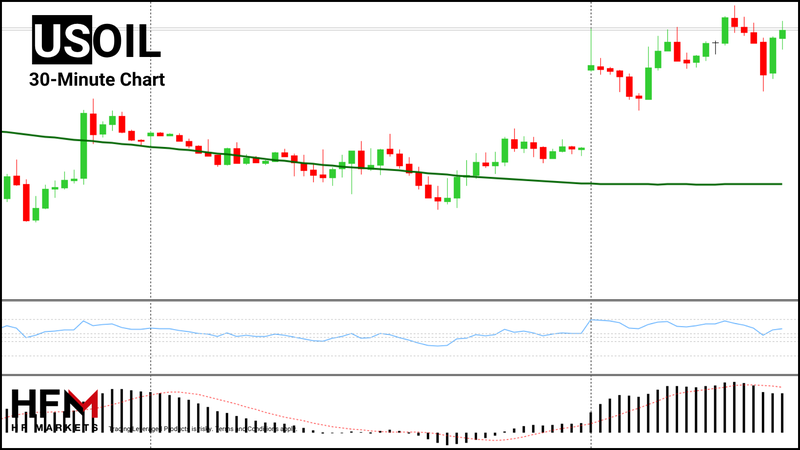
Crude oil opened with a bullish price gap measuring 1.70%. The price thereafter rose even further above $86, but has since lost momentum. However, even with the retracement, the price is maintaining a bullish price indication. The price is remaining above the trendline and moving average. However, the price is slightly below the VWAP, though this may indicate the possibility of entering at a competitive price. While the price on the 5-minute timeframe remains above the 200-bar simple moving average, buy signals are likely to remain intact.
US Dollar - US Dollar Finds Support But Retraces
The US Dollar is the worst-performing currency of the day as it loses some of last week’s gains. However, the currency is the best-performing of the past week. The Dollar found support from the hawkish tone of the Federal Reserve, lower risk sentiment, and higher oil prices.
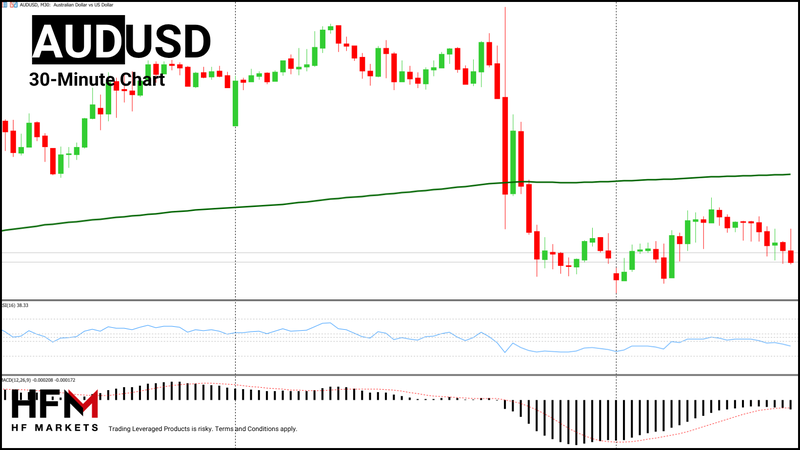
At the start of the European session, the best-performing currencies are the Japanese Yen, Swiss Franc and the Euro. For this reason, traders wishing to trade a weakening Dollar may opt for the EUR/USD, USD/CHF and USD/JPY. The worst-performing currencies are the Australian Dollar and the British Pound.
A key factor for the US Dollar will be price volatility in the oil markets and this week’s employment data. If crude oil remains above $85 per barrel and NFP data beats expectations, the US Dollar may rise back to 100.00. However, the US Dollar is currently continuing to retrace lower so far.
Key Takeaways:
- US-Iran tensions have escalated again following the first direct exchange of strikes since July.
- Crude Oil has moved back above $85 per barrel, increasing concerns over potential supply disruptions through the Strait of Hormuz.
- Fed Chair Kevin Warsh adopted a more hawkish tone at Jackson Hole, stressing that inflation remains too high.
- Higher interest rate expectations have provided support to the US Dollar, despite the current retracement.
- This week’s US employment data, particularly NFP, will be a key driver of Fed expectations and market volatility.


Terms and Conditions apply
Click here to access our Economic Calendar.
Disclaimer: This material is provided as a general marketing communication for information purposes only and does not constitute an independent investment research. Nothing in this communication contains, or should be considered as containing, an investment advice or an investment recommendation or a solicitation for the purpose of buying or selling of any financial instrument. All information provided is gathered from reputable sources and any information containing an indication of past performance is not a guarantee or reliable indicator of future performance. Users acknowledge that any investment in Leveraged Products is characterized by a certain degree of uncertainty and that any investment of this nature involves a high level of risk for which the users are solely responsible and liable. We assume no liability for any loss arising from any investment made based on the information provided in this communication. This communication must not be reproduced or further distributed without our prior written permission.
Michalis Efthymiou
Michalis Efthymiou has extensive experience within the financial sector throughout the UK and Europe. After spending 5 years in London where Michalis operated as a financial advisor and an underwriter, he then entered the market analysis sector.
Additionally, he held training sessions and seminars in over seven countries across the globe and is now focused on providing investors with the required guidance to operate within the market with full confidence.
His teaching methods are based on technical analysis, fundamental analysis and order flow analysis, as well as how to view the market from an institutional angle.
