


Japan Intervenes to Boost the Yen
The Japanese government intervened in the currency market for the fourth time this year to strengthen the Japanese Yen. The Yen rose 3.30% against the US Dollar, taking the exchange rate to its lowest level since mid-May. However, the Japanese Yen did not find any support from the Bank of Japan, which chose to keep interest rates at 1.00%. The currency also came under pressure from weaker economic and inflationary data made public yesterday afternoon.
Global stocks are rebounding on relief over unchanged interest rates and positive earnings. However, many negative price drivers remain, including bond yields, which are almost at a 20-year high, and expectations of up to three rate hikes this year.
USD/JPY
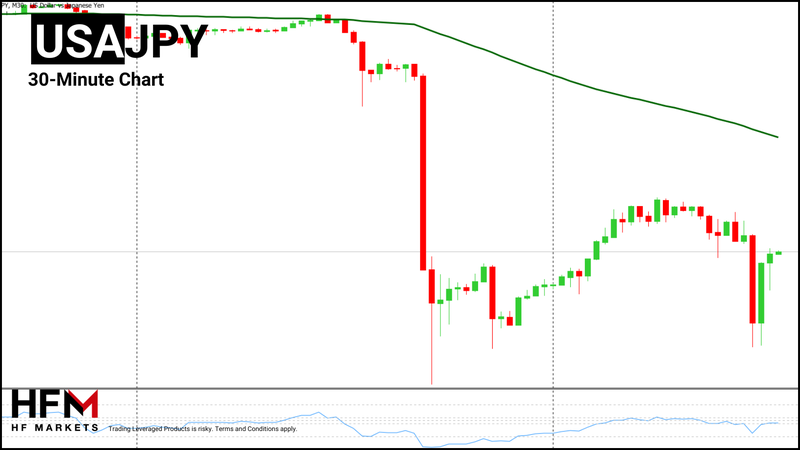
The USD/JPY is trading at 160.40 after the Japanese government chose to boost the currency before the BOJ’s rate decision. The intervention took place in two phases, the first at the end of the Japanese session, and another larger intervention before the opening of the US session.
It is no secret that the Japanese government is looking to keep the USDJPY exchange rate below 160.00. Before the intervention, the price of USD/JPY was almost at 164.00 and, with no rate adjustment from the BOJ this morning may even have edged closer to 165.00. Any price above 160.00 is at risk of seeing the Japanese government intervene. According to reports, the US government is also in favour of the exchange rate weakening slightly and is assisting Japan in boosting the currency.
However, traders should note that interventions are known not to support currencies in the long-term. The Japanese government has taken similar currency operations on three occasions this year and many more since 2022. However, the Japanese Yen has continued to decline. This is due to the Bank of Japan lacking decisiveness over its monetary policy and rate hikes.
According to the Bank of Japan Governor, Mr Ueda, the central bank will ‘manage the policy to avoid falling behind the curve’. However, many economists and investors still deem this less hawkish than the Federal Reserve. Many analysts advise that the Japanese government may even continue to intervene further in the upcoming days.
Key levels for the Japanese Yen are 159.00, 160.88, 161.69, and 162.94.


Terms and Conditions apply
Click here to access our Economic Calendar.
Disclaimer: This material is provided as a general marketing communication for information purposes only and does not constitute an independent investment research. Nothing in this communication contains, or should be considered as containing, an investment advice or an investment recommendation or a solicitation for the purpose of buying or selling of any financial instrument. All information provided is gathered from reputable sources and any information containing an indication of past performance is not a guarantee or reliable indicator of future performance. Users acknowledge that any investment in Leveraged Products is characterized by a certain degree of uncertainty and that any investment of this nature involves a high level of risk for which the users are solely responsible and liable. We assume no liability for any loss arising from any investment made based on the information provided in this communication. This communication must not be reproduced or further distributed without our prior written permission.
Michalis Efthymiou
Michalis Efthymiou has extensive experience within the financial sector throughout the UK and Europe. After spending 5 years in London where Michalis operated as a financial advisor and an underwriter, he then entered the market analysis sector.
Additionally, he held training sessions and seminars in over seven countries across the globe and is now focused on providing investors with the required guidance to operate within the market with full confidence.
His teaching methods are based on technical analysis, fundamental analysis and order flow analysis, as well as how to view the market from an institutional angle.
