


Oil Slides as Bonds Rally: Iran Diplomacy Lifts Market Sentiment
Global financial markets are finding some relief as oil prices extend their decline, easing concerns that elevated energy costs could keep inflation and interest rates higher for longer.
Government bonds and US Treasury futures strengthened on Wednesday as crude oil fell for a sixth consecutive session. At the same time, technology shares continued to benefit from renewed optimism surrounding artificial intelligence, helping Asian equities build on recent gains.
However, the broader market environment remains far from settled. Investors continue to monitor diplomatic developments involving the United States and Iran, expectations for further Federal Reserve interest-rate hikes, and the upcoming US-China talks.
Oil Prices Fall as Supply Concerns Ease
Oil remains one of the most important drivers of global market sentiment.
Brent crude fell below $99 per barrel during Wednesday’s Asian session, extending a decline that has significantly reduced prices from their recent Middle East conflict-driven highs. US crude also traded around the $90 level.
Two developments have helped ease fears of an immediate supply shortage.
First, Saudi Arabia has restarted operations at its East-West Pipeline following disruptions earlier in September. The pipeline allows Saudi crude to reach the Red Sea port of Yanbu, providing an alternative export route that reduces reliance on the Strait of Hormuz. Reuters reported that operations had resumed, although a full restoration of capacity could take several weeks.
Second, markets are responding to renewed diplomatic efforts surrounding the conflict with Iran. US President Donald Trump said discussions with Iran had made progress and expressed expectations that an eventual settlement could be reached, although his comments have continued to include strong warnings towards Tehran.
The possibility of greater oil flows through the region is particularly important. Iran has indicated that reopening the Strait of Hormuz could form part of a diplomatic process if US pressure is reduced. Any sustained improvement in shipping conditions could remove some of the geopolitical premium that pushed energy prices sharply higher earlier this year.
Higher oil prices can feed directly into headline inflation through fuel, transportation, and production costs. When energy prices rise sharply, investors may expect central banks to keep interest rates elevated for longer, usually putting upward pressure on government bond yields.
The opposite dynamic is now offering some relief. A sustained decline in oil could therefore become increasingly important for bonds. If lower energy prices eventually translate into softer inflation, investors may reduce expectations for additional monetary tightening.
For now, however, that scenario is far from guaranteed.
![2026-09-23 09_27_11-48132278 - HFMarketsGlobal-Demo - Netting - HF Markets (SV) Ltd. - [USOIL,Daily]](/api/get-analysis-image/?file=images/2026-09-23_09_27_11-48132278_-_HFMarketsGlobal-.original.png)
Federal Reserve Keeps the Dollar Supported
Despite falling oil prices, the US Dollar remains close to its strongest level in around two months as traders continue to price in the possibility of further Federal Reserve rate increases.
The Fed raised interest rates last week, and several policymakers have since indicated that inflation remains a concern. Richmond Fed President Tom Barkin said price pressures were not limited to energy and tariffs, pointing to strong consumer demand and broader economic momentum.
Markets have consequently continued to debate whether the Fed could raise rates again at its October meeting. Futures pricing recently showed roughly even odds of another 25-basis-point increase.
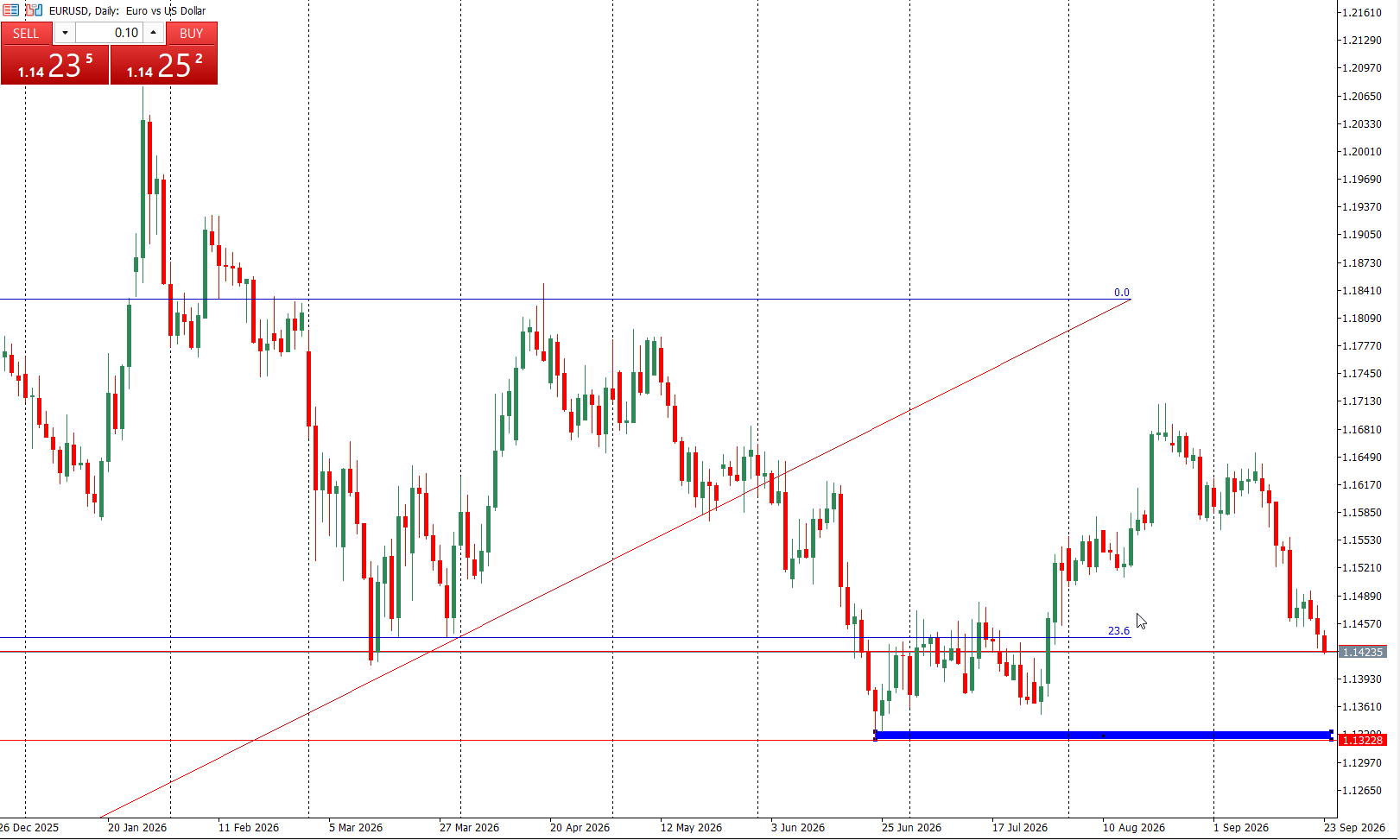
This expectation has helped the US Dollar Index remain around the 100 level, while the euro has traded close to multi-week lows.
The Japanese yen has also remained under pressure near 157 per Dollar. Although the Bank of Japan recently raised its policy rate to 1.25%, two dissenting votes and limited guidance over future tightening left investors questioning how quickly Japanese interest rates could rise from here.
AI Optimism Pushes Technology Stocks Higher
While energy and bond markets focus heavily on geopolitics and inflation, equity investors have another major theme to consider: artificial intelligence.
Renewed enthusiasm surrounding AI helped the NASDAQ reach a fresh intraday record this week. Technology and semiconductor stocks have regained momentum after concerns earlier in the year over AI investment costs and the speed at which companies could generate returns from their spending.
That optimism has spread into Asian markets.
MSCI’s broad Asia-Pacific index outside Japan rose around 0.7% on Wednesday and headed towards a sixth consecutive session of gains. South Korean equities advanced as semiconductor shares strengthened, while Taiwan’s market moved close to record territory.
Lower oil prices are providing another tailwind. Cheaper energy can reduce inflation expectations, limit pressure on bond yields, and improve the outlook for corporate margins, particularly in energy-intensive industries.
The combination of softer crude and renewed AI enthusiasm has therefore improved risk sentiment even while geopolitical uncertainty remains elevated.
US-China Talks Become the Next Major Market Focus
Attention is also shifting towards talks between President Trump and Chinese President Xi Jinping.
Officials from both countries have recently described preparatory discussions covering trade, artificial intelligence, and investment in positive terms, although significant disagreements remain.
For financial markets, the key issue is whether the talks can prevent another escalation in tariffs, technology restrictions, or critical-mineral controls.
Even limited progress could reduce another source of uncertainty for global equities. Conversely, renewed tensions between the world’s two largest economies could quickly challenge the recent improvement in market sentiment.
Gold Remains Pressured by Higher Rate Expectations
Gold has struggled to benefit significantly from geopolitical uncertainty as rising interest-rate expectations and a stronger Dollar offset safe-haven demand.
Spot gold traded around $4,345 per ounce early Wednesday. Higher interest rates tend to create a headwind for bullion because gold does not generate interest, while a stronger US Dollar increases its cost for buyers using other currencies.
The metal may therefore remain caught between two opposing forces: geopolitical uncertainty supporting demand, and expectations of tighter monetary policy limiting upside momentum.
What Markets Are Watching Next
The immediate market outlook is increasingly tied to the direction of oil.
Further progress towards diplomatic arrangements involving Iran, improved shipping through the Strait of Hormuz, or additional Saudi supply could extend the decline in crude. That would potentially reduce inflation fears, support government bonds, and provide a more favourable environment for equities.
However, the geopolitical situation remains highly uncertain, meaning another escalation could quickly reverse the recent move.
At the same time, Federal Reserve communication remains crucial. Falling oil alone may not be enough to prevent further rate hikes if US policymakers continue to see persistent inflation across services and consumer demand.
For now, markets are benefiting from an unusual combination: oil prices are falling, bond-market pressure is easing and AI optimism is supporting equities. Whether that environment lasts will depend heavily on what comes next from the Middle East, the Federal Reserve and US-China negotiations.


Terms and Conditions apply
Click here to access our Economic Calendar.
Disclaimer: This material is provided as a general marketing communication for information purposes only and does not constitute an independent investment research. Nothing in this communication contains, or should be considered as containing, an investment advice or an investment recommendation or a solicitation for the purpose of buying or selling of any financial instrument. All information provided is gathered from reputable sources and any information containing an indication of past performance is not a guarantee or reliable indicator of future performance. Users acknowledge that any investment in Leveraged Products is characterized by a certain degree of uncertainty and that any investment of this nature involves a high level of risk for which the users are solely responsible and liable. We assume no liability for any loss arising from any investment made based on the information provided in this communication. This communication must not be reproduced or further distributed without our prior written permission.
Andria Pichidi
Having completed her five-year-long studies in the UK, Andria Pichidi has been awarded a BSc in Mathematics and Physics from the University of Bath and a MSc degree in Mathematics, while she holds a postgraduate diploma (PGdip) in Actuarial Science from the University of Leicester.
Following her various academic endeavours, Andria set eyes on the fascinating Forex industry where she has obtained valuable experiences after being active in the field for the past few years. In 2016, she joined HFM as a Market Analyst with a mission to actively support the company’s clients in becoming better traders, by delivering daily market reviews.
