


Pound Faces Pressure Amid High Inflation and Weak Employment Data
The British Pound came under pressure from UK employment data which complicates the Bank of England’s future rate decisions. The Bank of England would ideally like to see less upward pressure on inflation while the employment sector remains steady. As the UK’s employment data failed to accomplish this, the GBP Index fell 0.50%.
UK Employment Data
The UK Average Earnings Index rose from 4.7% to 5.00% which tends to have a positive impact on the currency. However, salary growth is also known to apply upward pressure on inflation, a key concern for the Bank of England. Currently, analysts predict the UK to have the highest inflation within the G7 Group.
UK inflation has risen to 3.8% and remained there for 2 consecutive months. With the UK inflation rate at a 21-month high, higher salaries can make it difficult for inflation to fall to the bank’s 2% target. As this can prompt the BoE to have a more hawkish approach the development can support the GBP. However, due to the UK’s risk of economic contraction, the development remains negative.
In addition to this, the UK’s Unemployment Claimant Claims rose by 25,800 claims. The figure is 15,500 higher than previous expectations and is the highest seen since June. In August, the UK Unemployment Rate rose to 4.80% from 4.00% the year before. The rise in the Unemployment Rate also pressures the Pound.
Bank of England
Investors are watching comments from regulator Megan Green closely. She joined most of the Bank of England’s Monetary Policy Committee in keeping rates at 4.00% in September and opposed August’s narrow 25-basis-point cut. Her latest remarks suggest borrowing costs could rise at the next meeting.
The Bank of England is likely to cut interest rates, similar to the rest of the world, however, less frequently. According to experts the Bank of England is likely to cut either 25 or 50 basis points over the next 6 months. This is particularly less dovish than the Federal Reserve which is likely to cut between 75-100 basis points. The Bank of England hawkishness is a positive note for the GBP, but only if the economy and UK budget can maintain investor confidence.
The next UK budget is due at the end of November 2025. For this reason, the end of October and into November is likely to be a volatile period for the Pound.
GBP - Technical Analysis
This week, the British Pound has been the worst performing currency after the Australian and New Zealand Dollar. The best-performing currencies have been the US dollar and the Japanese yen, with the latter recovering from earlier losses.
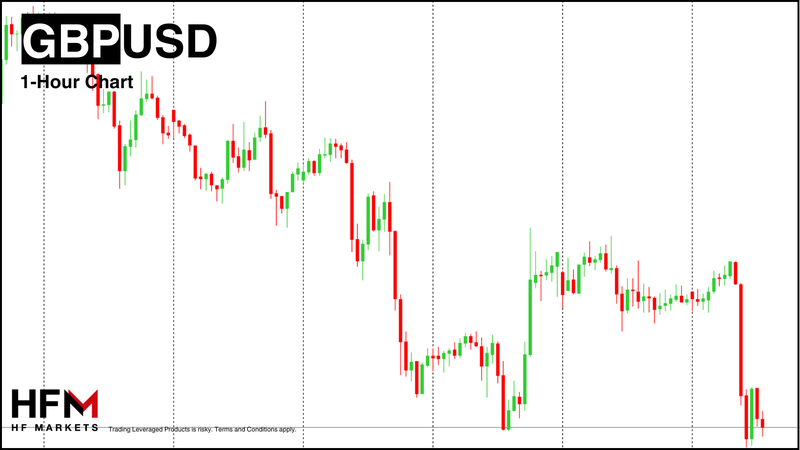
When analyzing the Pound against the US Dollar the exchange rate is forming clear lower highs and lows. Due to this, the GBPUSD is showing a direct downward trend and is trading at the lowest price since August 1st.
The GBPUSD is trading clearly below the 75 and 100 bar exponential moving averages as well as below the 50.00 on the RSI. This is providing a clear indication of a bearish momentum. However, the price has not established itself below the support level and previous swing low at 1.32500. For this reason, traders will be key for bearish momentum to regain strength and attempt a further breakout.
Key Takeaways:
- The British Pound fell 0.50% after UK employment data showed slower job growth and rising unemployment. This development complicates the Bank of England’s rate path.
- Average earnings rose from 4.7% to 5.0%, supporting household income but reinforcing inflationary pressure.
- Despite global easing trends, the BoE is expected to cut rates by only 25-50 basis points in the next six months. This maintains a relatively hawkish stance compared with the Fed’s projected 75-100 basis-point cuts.
- Technically, GBPUSD remains in a downtrend, forming lower highs and lows and trading below key moving averages and RSI 50. A break below the 1.3250 support could confirm further downside.


Terms and Conditions apply
Click here to access our Economic Calendar.
Disclaimer: This material is provided as a general marketing communication for information purposes only and does not constitute an independent investment research. Nothing in this communication contains, or should be considered as containing, an investment advice or an investment recommendation or a solicitation for the purpose of buying or selling of any financial instrument. All information provided is gathered from reputable sources and any information containing an indication of past performance is not a guarantee or reliable indicator of future performance. Users acknowledge that any investment in Leveraged Products is characterized by a certain degree of uncertainty and that any investment of this nature involves a high level of risk for which the users are solely responsible and liable. We assume no liability for any loss arising from any investment made based on the information provided in this communication. This communication must not be reproduced or further distributed without our prior written permission.
Michalis Efthymiou
Michalis Efthymiou has extensive experience within the financial sector throughout the UK and Europe. After spending 5 years in London where Michalis operated as a financial advisor and an underwriter, he then entered the market analysis sector.
Additionally, he held training sessions and seminars in over seven countries across the globe and is now focused on providing investors with the required guidance to operate within the market with full confidence.
His teaching methods are based on technical analysis, fundamental analysis and order flow analysis, as well as how to view the market from an institutional angle.
